The complete color belt foundation of Tang Soo Do and Soo Bahk Do — white belt through 6th gup. Four forms, four ranks, about a year of training.
- 4Rank levels
- 4Forms
- 40+Lessons
- ∞Lifetime access
The Course
Four ranks. One course. Everything from your first day in a do bok through 6th Gup.
This is the full Moo Duk Kwan color belt curriculum as taught by Hwang Kee, covering 10th Gup to 9th, 9th to 8th, 8th to 7th, and 7th to 6th — about a year of training for most students.
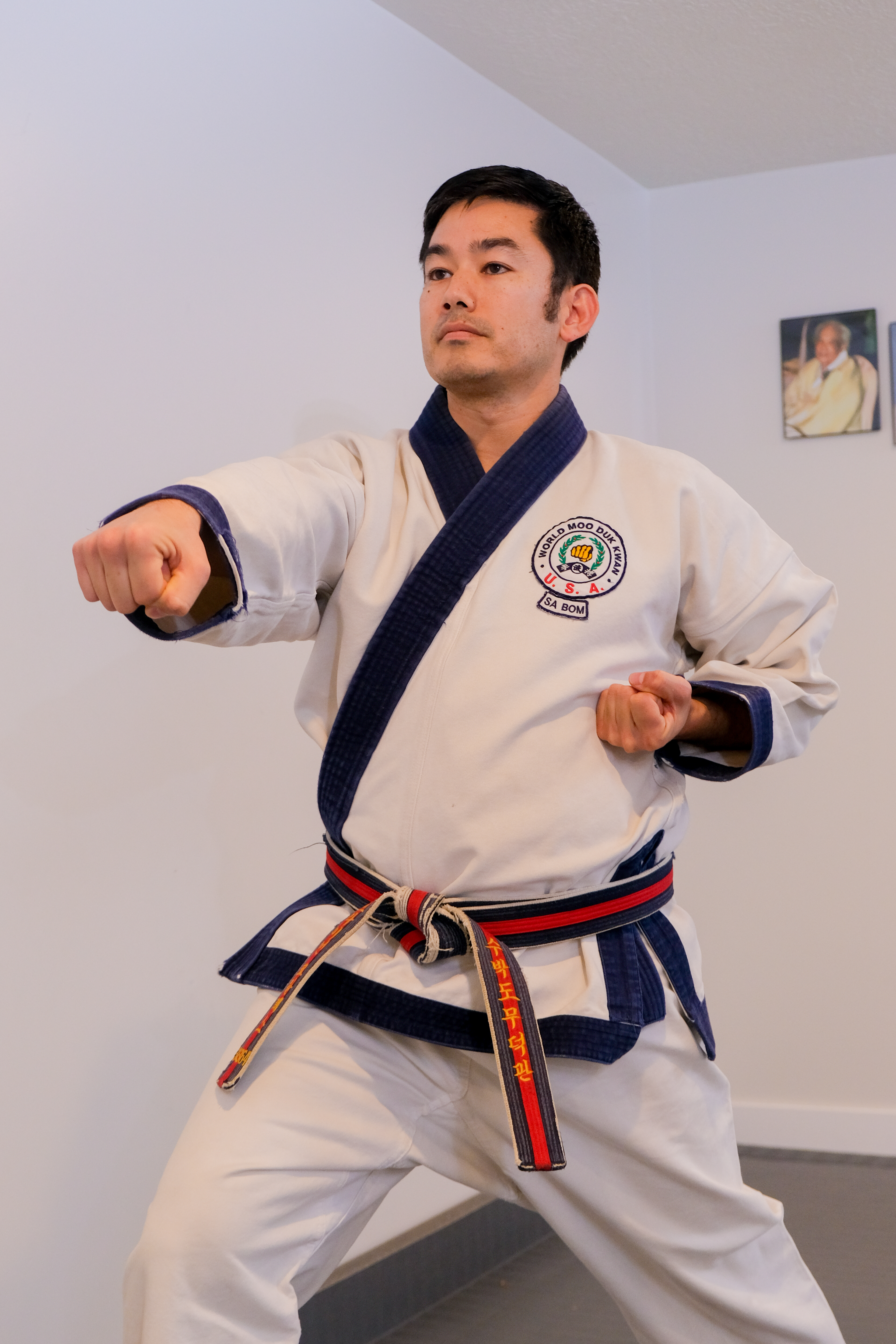
Forms
Ki Cho Hyung Il Bu, E Bu, and Sam Bu--the first three Basic forms, plus Pyung Ahn Cho Dan. Each taught with a full-speed demonstration, a detailed walkthrough, and a separate review lesson for refinement.
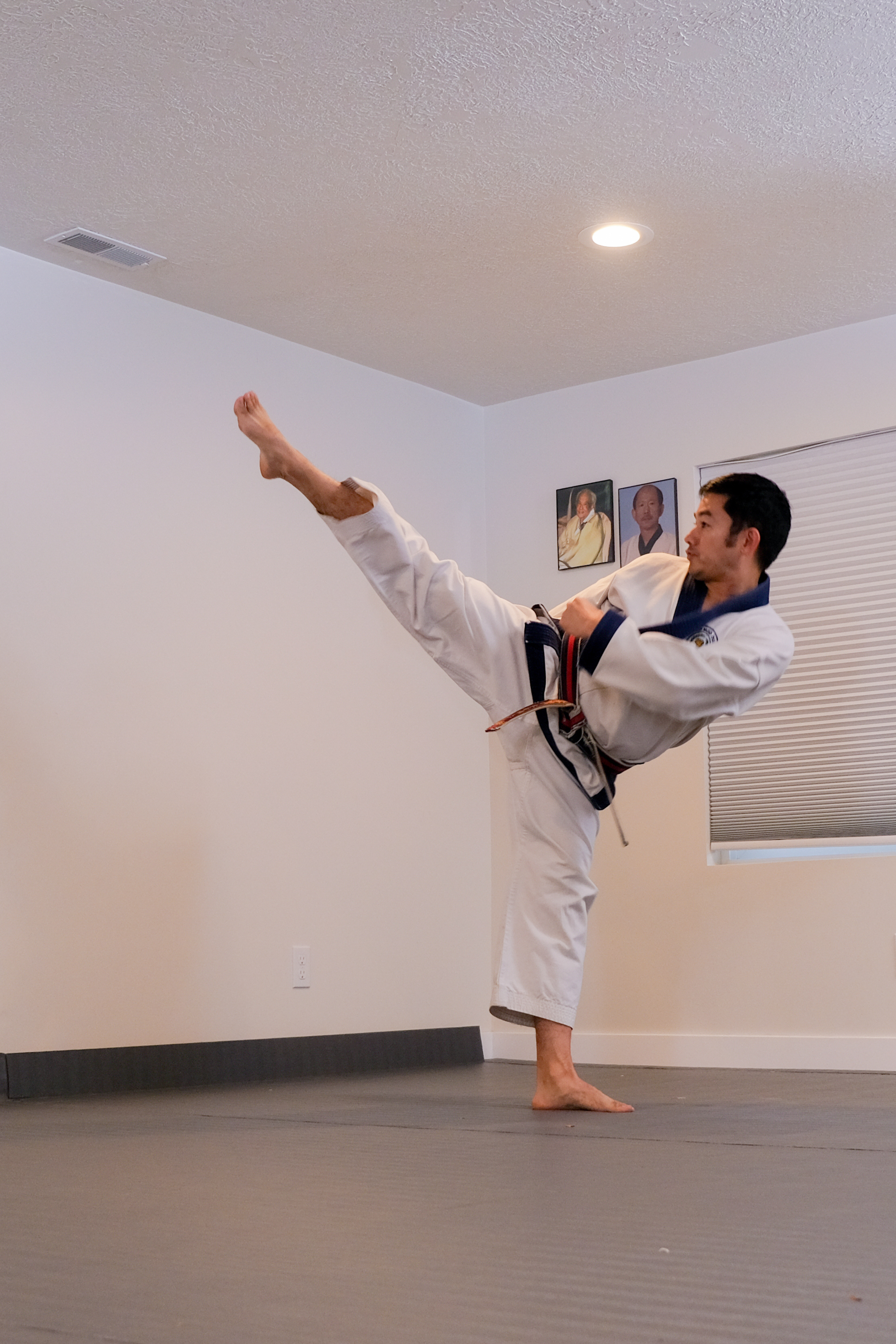
Basics
Front stance and back stance, hand techniques at every rank, waist twisting mechanics, front kick, roundhouse, side kick, stretch and crescent kicks.
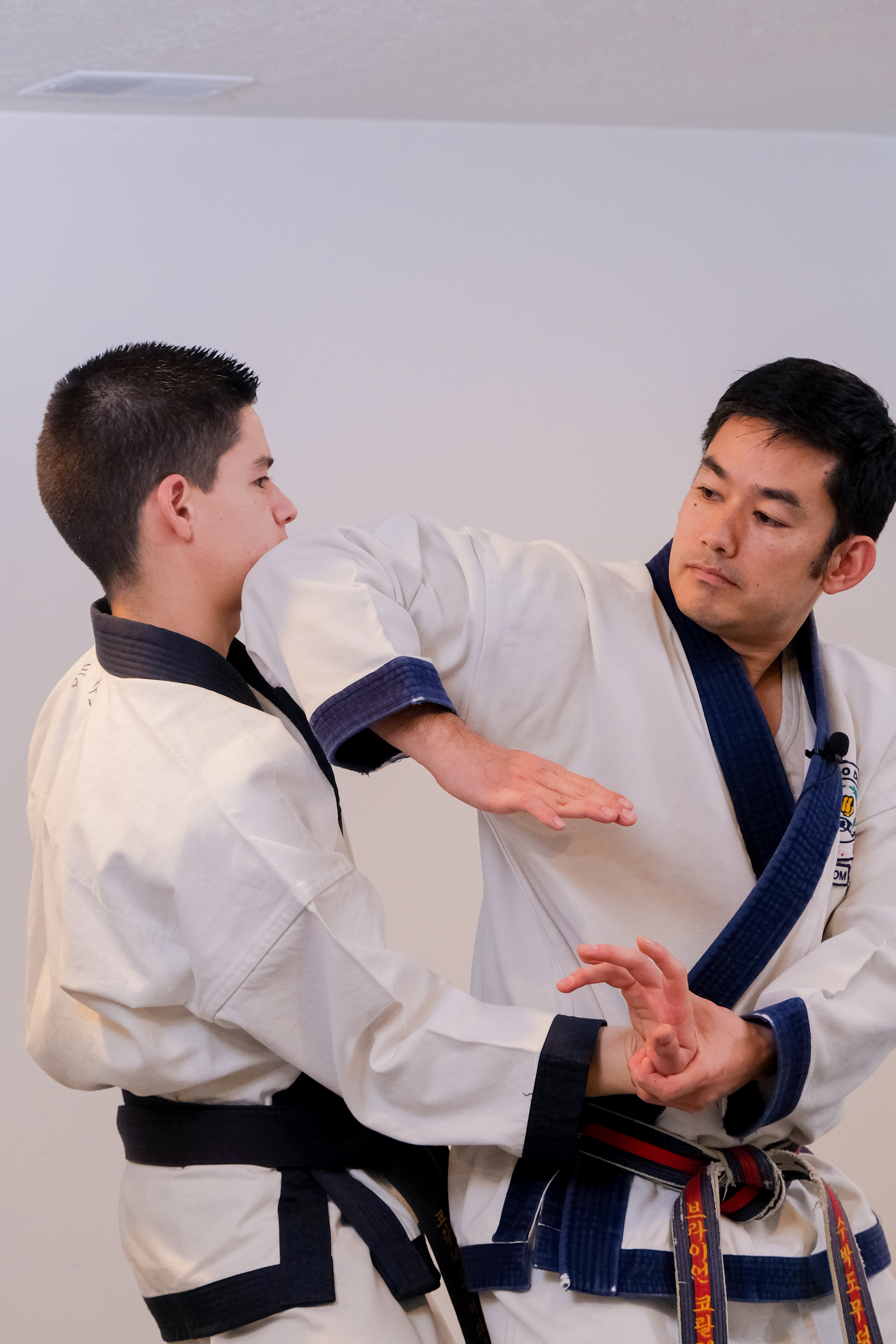
Applications
One-steps, cross wrist grabs, and Kyuk Pa breaking at both orange belt levels.
Curriculum
- 10th Gup to 9th Gup Requirements
- Front Stance & Use of Hip (13:08)
- Soo Gi - Hand Techniques (26:40)
- Warm Up For Kicks (5:24)
- Front Kick (11:26)
- Additional Kicking Videos
- Introduction to the Basic Forms
- Ki Cho Hyung Il Bu (0:50)
- Ki Cho Hyung Il Bu Tips (5:39)
- Terminology
- Acquire Federation Membership
- Quiz
- Evaluation to 9th Gup (0:26)
- 8th Gup to 7th Gup Requirements
- Back Stance (2:56)
- Soo Gi - Hand Techniques (25:46)
- Stretch and Crescent Kicks (11:54)
- Ki Cho Hyung E Bu Review (6:23)
- Ki Cho Hyung Sam Bu (1:04)
- Ki Cho Hyung Sam Bu Tips (4:58)
- Kyuk Pa - Breaking (10:54)
- Terminology
- Quiz
- Evaluation to 7th Gup (0:26)
- Reference Materials
- 7th Gup to 6th Gup Requirements
- Soo Gi - Hand Techniques (14:51)
- Side Kick (8:27)
- Ki Cho Hyung Sam Bu Review (10:18)
- Pyung Ahn Cho Dan (0:51)
- Pyung Ahn Cho Dan Walkthrough (7:58)
- One Steps (2:24)
- Cross Wrist Grabs 1-2 and Intro (2:09)
- Kyuk Pa - Breaking (13:48)
- Terminology
- Quiz
- Evaluation to 6th Gup (1:22)
- Green Belt

Your instructor
Brian Corrales, Sa Bom — 6th Dan
- Certified Sa Bom — master instructor
- USA Technical Advisory Committee
- Moo Duk Kwan Heritage Liaison, appointed 2021
- 20 years of teaching experience
- 35+ years of consistent training
Brian's background is in the system founded by Hwang Kee in 1945 — the source of both Tang Soo Do and Soo Bahk Do, and one of the roots of modern Tae Kwon Do. It draws on Okinawan karate, Tan Tui, Ba Duan Jin, Tai Chi and Kwon Bup as documented in the Moo Yei Do Bo Tong Ji.
Sa Bom is the highest teaching certification the art offers, designating a master model instructor. Brian holds two national appointments from Kwan Jang Nim H.C. Hwang.
Test for rank when you're ready
Rank evaluation is optional and sold separately. The curriculum stands on its own — plenty of students train it purely as reference, or to sharpen what they already practice elsewhere.
If you do want certified rank, every section of this course includes the full testing requirements for that level, the video submission standards, and a demonstration example. You'll receive a detailed evaluation from Brian Corrales, Sa Bom, with certification issued through Wasatch Martial Arts Academy under the World Moo Duk Kwan.
Learn about certificationWhat an evaluation involves
- Train consistently. Around two hours a week for three to four months at your current rank.
- Record your video. In uniform, full body in frame, with room to move freely.
- Demonstrate the basics. Blocks and strikes on both sides, kicks from both angles, following the format given in your rank section.
- Announce and perform your form. Name it, then run it, exactly as shown in the example video.
- Submit and receive feedback. A detailed evaluation of your performance, with certification on passing.
Certified rank requires membership in the US Soo Bahk Do Moo Duk Kwan Federation or your country's World Moo Duk Kwan affiliate. No membership is needed to take the course. One-steps, wrist grabs and breaking require a partner.
Questions about the White & Orange Belt course
Straight answers about prerequisites, pace, and what you need before you start.
Will this match what I'm taught in Tang Soo Do or another karate style?
Very likely. The Ki Cho and Pyung Ahn forms taught in this course are shared across Tang Soo Do, Soo Bahk Do, and most Okinawan and Japanese karate styles. Details of execution vary between organizations, but the material itself will be familiar.
Do I need to belong to a martial arts organization to take this course?
No. Nothing in the course requires membership anywhere. The only part that does is optional rank certification — you can ignore that entirely and still get the full curriculum.
Can I learn this without a school?
Yes, and many students do. Every technique is taught from the beginning with full explanation. You'll want a training partner for one-steps, wrist grabs, and breaking — the rest you can train alone.
How long does it take to get from white belt to 6th Gup?
About a year for most students. To see meaningful progress, plan on training four to six hours a week across the four rank levels covered in this course.
What equipment do I need to get started?
A uniform and enough space to move. When you reach the partner exercises — one-steps, wrist grabs, and breaking — you'll need a training partner.
How long do I have access to the course?
Indefinitely. This is a one-time purchase, not a subscription, and it includes any updates made to the course.
Do I get my money back if I don't like a course?
Yes. Standalone courses — color belt bundles and one-off products — can be refunded in full within 7 days of purchase, as long as you haven't downloaded any of the files yet. Once anything is downloaded, the purchase is final, since the course is yours to keep permanently. This is different from Pro, which is a subscription with its own 14-day refund window.
Can my whole family train from one course purchase?
Yes. One standalone course purchase can be shared and trained from by everyone in your household. The only thing that requires an individual purchase is rank certification: if someone in your household wants to test, that person needs their own course purchase under their own name before adding the certification fee.
Not sure you're ready to buy?
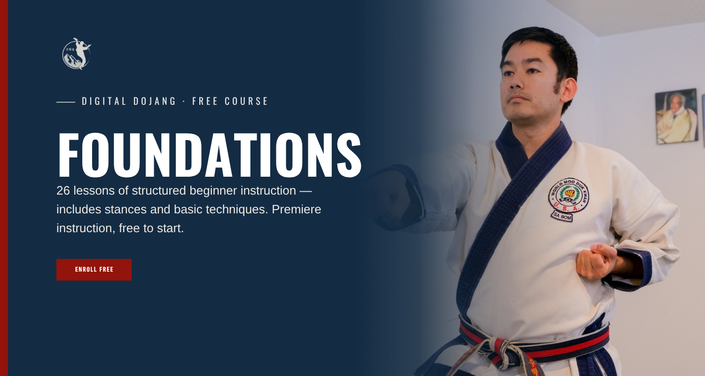
Start with Foundations. It's free, and it's the course I'd hand a brand-new student on their first night in the dojang. Foundations covers what happens before rank begins: how a dojang works, how to bow and address your instructor, what the belt system actually means, how rank certification works, your first stances, and the fundamental techniques everything else is built on. By the end you'll be ready for 9th gup — the first rank in this course.
No card, no trial period, no expiration. If it turns out traditional Korean martial arts isn't for you, you'll have lost nothing but a few evenings. If it is, you'll already know how the training works when you come back.
Start Foundations — free →MORE WAYS TO TRAIN
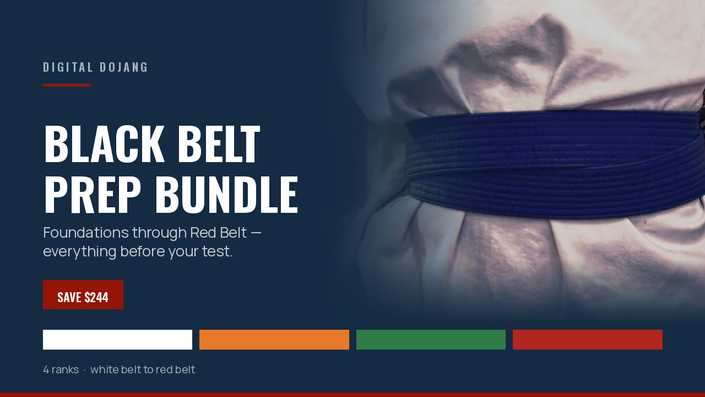
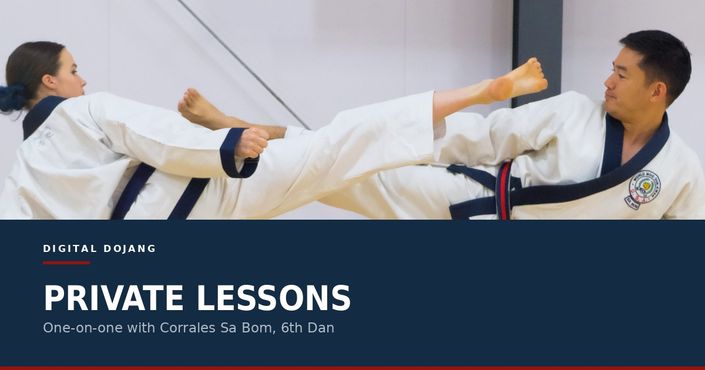
Not sure this is the right fit yet, or want to go further? Try Foundations free, save with the Black Belt Prep Bundle, or train one-on-one with Sa Bom Nim directly.